
BLOG
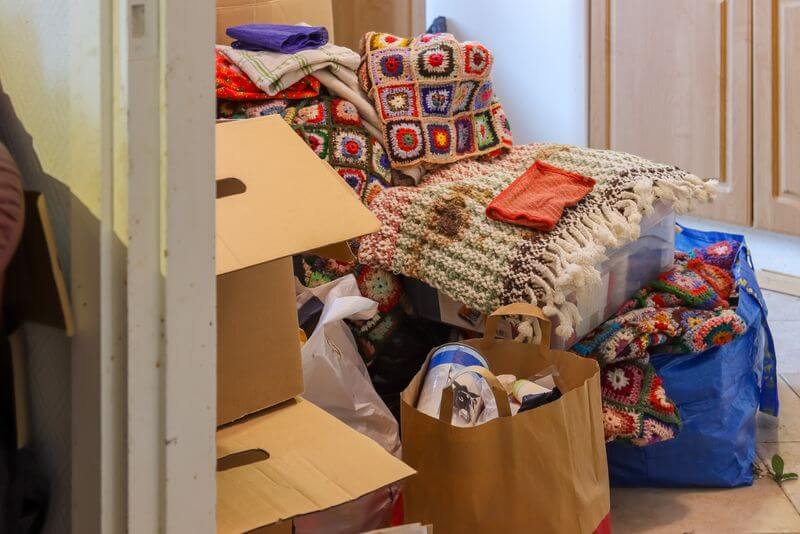
Who Pays For Hoarding And Squalor Clean Up Services In Australia?
Who pays for a hoarding and squalor clean up depends on three things. Who owns the property, who lives there and why the clean up is happening now. In most cases the person living in the home or their family, pays. However, landlords, deceased estates, public housing authorities and even local councils can all end up paying for the work. Several of them can then recover the cost from someone else.
The law also differs between Queensland, New South Wales, Victoria, South Australia and the Northern Territory, so the details below go state by state. Because every property is different, the answer for yours may involve more than one of these. Let’s break down each situation.
Who Usually Pays For A Hoarding And Squalor Clean Up?

The table below covers the situations our crews see most often:
| Situation | Who usually pays first | Can the cost be recovered? |
|---|---|---|
| An owner living in their own home | The owner or their family | Eligible older people may qualify for a funded one-off clean up |
| A tenant has moved out and left belongings or rubbish | The landlord or agent | Yes, from the bond first, then through the state tribunal |
| The person has passed away | The estate, through the executor | The executor pays estate expenses before beneficiaries receive anything |
| A public housing tenant has moved out | The housing authority | Yes, the authority charges the former tenant |
| A council or health order has been issued | The owner or occupier named in the order | If the owner ignores it, the authority may do the work and recover the cost |
| An insurance claim | Rarely the insurer | Policies generally exclude wear and tear and poor maintenance |
When Family Members Pay
In practice, family members often pay. Usually, they want to make the home safe quickly. They also want discreet, careful work.
Be sure to check who is legally responsible before committing. In some situations it is the estate, a landlord or the property owner instead.
Where several relatives are sharing the bill, a written scope helps everyone. For example, our crews photograph each room and list what will be removed, cleaned and treated before any work starts. This way, everybody is kept informed about the entire process.
Finally, if the person is 65 or older, ask My Aged Care about potentially receiving funding support before you book.
What Tenants Are Legally Responsible For
Every state and territory requires tenants to keep a rental reasonably clean. At the end, they must hand it back in a similar condition, allowing for fair wear and tear. A build up of rubbish, food waste or soiled belongings is not fair wear and tear. In fact, Queensland’s Residential Tenancies Authority says fair wear and tear “does not include dirt/grime/grease or damage caused by the tenant during the tenancy”.
| State | Law | What the tenant must do at the end of the tenancy |
|---|---|---|
| Queensland | Residential Tenancies and Rooming Accommodation Act 2008, section 188 | Leave the premises “as far as possible, in the same condition they were in at the start of the tenancy, fair wear and tear excepted” |
| New South Wales | Residential Tenancies Act 2010, section 51 | Leave the premises “in a reasonable state of cleanliness” and “remove or arrange for the removal from the residential premises of all rubbish” |
| Victoria | Residential Tenancies Act 1997, section 63 | Leave the premises “reasonably clean” and in the same condition as when they moved in, taking fair wear and tear into account |
| South Australia | Residential Tenancies Act 1995, section 69 | Give the property back “in reasonable condition and in a reasonable state of cleanliness” |
| Northern Territory | Residential Tenancies Act 1999, section 51 | Give the premises back “in a reasonably clean condition, allowing for reasonable wear and tear” |
So when a tenant leaves a hoarded or squalid property behind, the cost of the clean up is generally theirs. The real question is how the landlord gets that money back.
When A Tenant Moves Out And Leaves A Hoard Behind
Normally the landlord or agent pays for the hoarding and squalor clean up first. After all, the property cannot be re-let until it is safe. Next, the landlord claims the cost against the bond. If the bond falls short or the tenant disputes the claim, the state tribunal decides.
- Queensland: the RTA says that to claim above the bond amount you lodge a dispute resolution request “to pursue the funds or compensation via QCAT”.
- New South Wales: a tenant can dispute a bond claim by applying to NCAT during the 14 day notice period.
- Victoria: the rental provider claims through the RTBA within 14 days. One of the listed grounds is that the renter “has not left the property reasonably clean”. Disputes go to VCAT or Rental Dispute Resolution Victoria.
- South Australia: disputes go to SACAT, which lists “cleaning and rubbish removal” among the claims it hears.
- Northern Territory: either party can refer a security deposit dispute to NTCAT, according to the NT Government.
Tribunals decide these claims on evidence. Therefore, keep the entry condition report, photos taken before the clean up and the written scope and invoice. In our experience, a before and after record from the crew is often a landlord’s most useful document.
Be Careful With Belongings Left Behind
A hoarded rental is rarely just rubbish. Consequently, landlords cannot simply fill a skip and move on. Each state has rules about goods a tenant leaves behind. In fact, Queensland’s RTA states plainly that seizing a tenant’s goods “in exchange for rent owing or other damages (e.g. repairs or cleaning) is not permitted”.
| State | Can be disposed of straight away | Must be stored or notified first |
|---|---|---|
| Queensland | Goods worth less than AUD$2,500 in total or goods that are unsafe or unhealthy to store | Other goods stored for one month. Personal documents go to the Public Trustee within 7 days (RTA) |
| New South Wales | Rubbish and perishable items | Goods under AUD$1,000 need 14 days’ notice, goods from AUD$1,000 to AUD$20,000 need 28 days’ written notice, personal documents need 28 days’ notice (NSW Government) |
| Victoria | Perishable food, dangerous goods and goods not worth any money | Saleable goods kept for at least 14 days, personal documents for at least 90 days (Consumer Affairs Victoria) |
| South Australia | Perishables. Goods worth less than the cost of removing, storing and selling them can go after 2 days | Valuable goods kept safe for 7 days (SA Government) |
| Northern Territory | Perishables and goods worth less than the cost of removal, storage and auction | Other goods stored safely, then auctioned after 30 days (NT Government) |
This is exactly why our crews sort before anything leaves the property. Our crews set aside and record documents, photographs, jewellery and anything that might have value. That way the landlord can meet these rules without slowing the clean up down.
Who Pays When The Person Has Passed Away?

When the person living in the home has died, their estate normally pays for the hoarding and squalor clean up. The executor organises the work, then pays for it out of the estate before anything is passed on. The NSW Government’s guide for executors explains that before distributing to beneficiaries “you will need to ensure that you have accounted for all debts and expenses”. It also warns that an executor may be personally liable for estate debts that are not paid first.
If the person was renting, the tenancy does not continue forever. In Queensland, for instance, the agreement ends one month after the tenant’s death unless notice is given sooner. The RTA adds that the executor or next of kin “is also responsible for removing any of their belongings left behind” (RTA). In South Australia, the tenancy ends automatically 30 days after a sole tenant dies (Law Handbook SA).
Sometimes a family member pays upfront because the estate is not yet available. In that case, agree it with the executor first, then keep every invoice. For more on the practical side, read our guide on how to clean out a deceased estate.
Public And Social Housing
When a public housing tenant moves out and leaves a hoard behind, the housing authority arranges the clean up. It then charges the cost back to the former tenant.
Queensland’s Department of Housing is direct: “We do charge you for any repairs needed due to damage, as well as for cleaning, mowing or rubbish removal from the property” (Queensland Government). Similarly, Homes NSW charges former tenants the actual cost of removing “any rubbish or household items left by the tenant or household at the end of the tenancy” (Homes NSW).
When The Council Or Health Authority Steps In
Complaints from neighbours about smells, pests or rubbish often bring the local council to the door. Councils do not normally pay for the clean up. Instead, they order the owner or occupier to fix the problem. If the owner ignores that order, the authority can arrange the work and recover the cost.
- New South Wales: section 124 of the Local Government Act 1993 lets a council order premises into “a safe or healthy condition”. It can also order waste removed. Under section 678, the council may then do the work itself and recover the cost “as a debt due to the council”.
- Queensland: under the Public Health Act 2005, an accumulation of waste can trigger a public health order. If ignored, a magistrate can let the authority do the work and recover the cost.
- Victoria: the Public Health and Wellbeing Act 2008 gives councils a duty to remedy nuisances that are dangerous to health or offensive. Councils can also issue improvement notices to compel a clean up.
- South Australia: under the South Australian Public Health Act 2011, an ignored notice lets the authority do the work. It then recovers the cost as a debt.
- Northern Territory: the Chief Health Officer issues public health notices under the Public and Environmental Health Act 2011. Costs of any action taken become a debt to the Territory.
In short, acting before an order arrives keeps you in control. You choose who does the work, when it happens and how discreetly the crew works.
Help For Older Australians Through My Aged Care
For older Australians, the Australian Government funds hoarding and squalor assistance through the Commonwealth Home Support Program. It covers “care planning and one-off clean-ups”, along with links to specialist support services.
To qualify, the person must be 65 or older. Aboriginal or Torres Strait Islander people qualify from 50, as do people aged 50 or older who are homeless or at risk of homelessness. An aged care assessment decides eligibility. Clients are also “expected to contribute to the cost of your care if you can afford to” (My Aged Care). The government has extended the program to 30 June 2029.
For younger NDIS participants, their support coordinator is the right first contact.
Will Insurance Cover A Hoarding And Squalor Clean Up?
Usually not, because insurers treat a hoarding and squalor clean up as a maintenance issue rather than sudden damage. In its review of home insurance claims, ASIC noted that damage due to “wear and tear” or “a failure to maintain property in ‘good condition’ is generally excluded from home insurance policies” (ASIC Report 768). A hoard builds up over time, so it usually falls into that category.
There are exceptions. For example, a burst pipe or a fire inside a hoarded home may be claimable. The clutter itself usually is not. Landlord policies also vary, so check the product disclosure statement before assuming either way. If a claim is possible, we can provide the written reports and photos insurers ask for.
What To Check Before You Book A Hoarding And Squalor Clean Up
- Work out who owns the property and whether a tenancy is still running.
- If it is a rental, find the entry condition report.
- If the person has died, speak to the executor before any work starts.
- Check for any council or health notice and its deadline.
- Do not throw out documents, photographs or anything that might have value.
- Ask for a written scope with photos, so everyone paying can see what they are paying for.
- Keep every invoice and report for the bond claim, the estate accounts or the insurer.
Hoarding And Squalor Clean Up FAQs
Yes, where the tenant has left the property less clean than when they moved in, beyond fair wear and tear. The landlord claims against the bond first, then applies to the state tribunal for any amount over the bond.
Not usually. The council orders the owner or occupier to clean up. If the owner ignores the order, some states let the authority do the work, then recover the cost.
It can. The Commonwealth Home Support Program funds one-off clean-ups for eligible older people after an aged care assessment. Clients are expected to contribute if they can afford to.
The estate pays, through the executor, before the executor distributes anything to beneficiaries.
Generally no, because most home policies exclude wear and tear plus poor maintenance. Damage from a sudden insured event inside the home may still be claimable.
Choose NTCSC For Your Hoarding And Squalor Clean Up

Dealing with a hoarded or squalid property? The team at National Trauma & Crime Scene Cleaning (NTCSC) provides discreet, compassionate hoarding cleaning right across Australia. We work with families, landlords, property managers, executors plus housing providers. Every job starts with a written scope, so whoever is paying knows exactly what they are getting.
Whoever ends up paying, you do not have to work it out alone. Contact NTCSC today for confidential advice about your hoarding and squalor clean up.
NOTE: Every figure and legal position quoted above is linked to its original source so you can check it yourself. Bear in mind, tenancy laws, public health laws and aged care programs change regularly. Use what you have read as a starting point rather than the final word on your situation. Confirm important matters with your state tenancy authority, local council or contact NTCSC for further advice on your property.